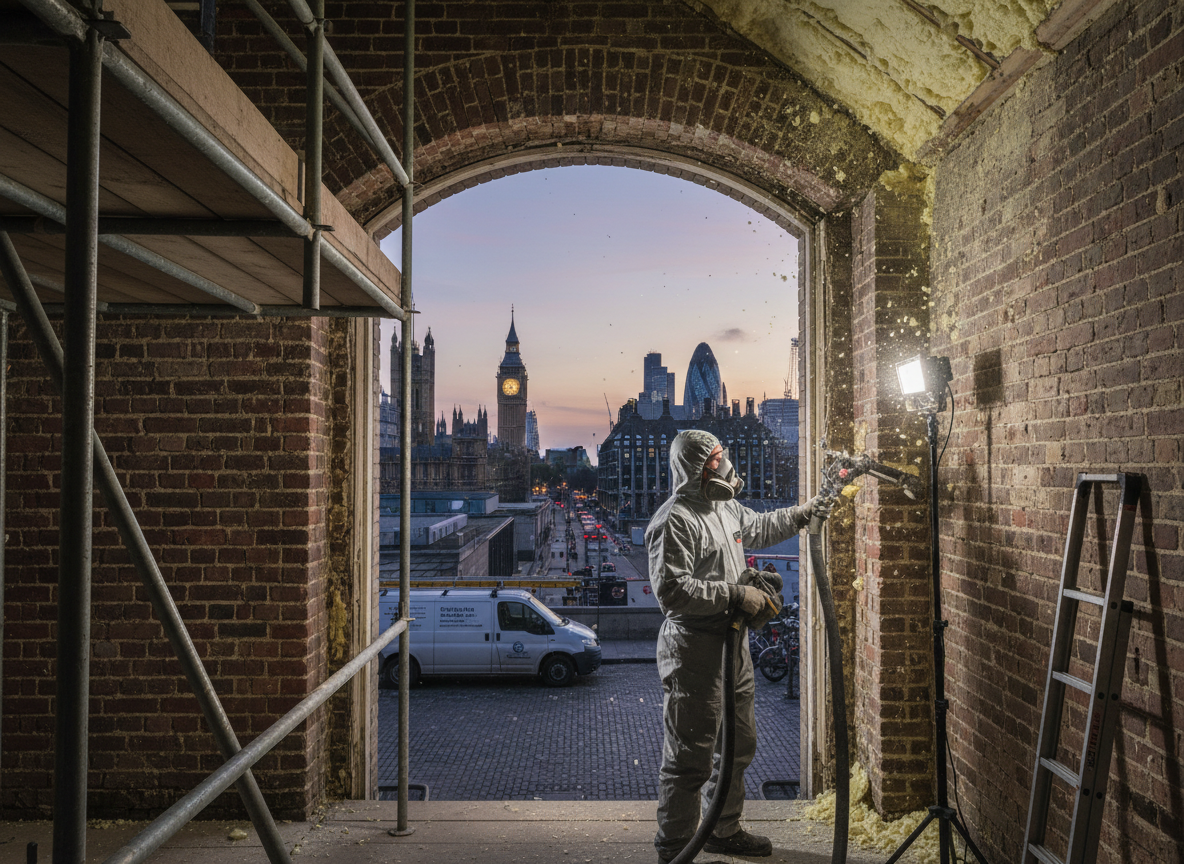
London's Victorian and Edwardian terraces in neighborhoods like Kensington and Chelsea commonly received spray foam insulation in lofts during the 2000s energy schemes. Over time this closed-cell material traps moisture against rafters, especially during the city's frequent winter rainfall and mild damp conditions. Removal requires careful cutting around original timber trusses without damaging lath and plaster ceilings below, followed by restoring ventilation paths that many retrofits blocked.
In post-war estates across Greater London the foam often sits over older mineral wool layers, creating hidden condensation pockets that affect chimney breasts and party walls. Night or weekend callouts at 197 Kensington High St address urgent leaks before water tracks into habitable rooms. Crews use negative air machines to contain dust in tight roof voids typical of terraced stock, then bag and remove material through loft hatches rather than cutting new access points.
Greater London's clay soils and high water table mean any remaining foam residue can hold humidity against brickwork, accelerating timber decay in roof plates. Proper extraction includes checking for asbestos in older underlayments common in pre-1980s Kensington properties and coordinating disposal at licensed London sites. This prevents callbacks when homeowners later convert lofts into living space.
Technician insight
In London, the thing that catches most people out with 24/7 Spray Foam Removal is the Victorian terraces around Kensington. Narrow roof voids and multiple layers from 2000s retrofits trap moisture against rafters during wet winters, and homeowners often miss how quickly condensation spreads into party walls once ventilation is blocked.
Kensington Terrace Loft
Homeowner in a Victorian terrace near Kensington High Street reported ceiling staining after heavy rain. Inspection showed closed-cell foam sealing rafters and trapping damp. We cut sections overnight, restored original airflow gaps, and cleared residue without disturbing lath ceilings.
How it works
- 1
Site Assessment
Inspect loft access, foam depth, and any hidden layers in the specific property type.
- 2
Containment Setup
Seal work area with sheeting and negative air to protect living spaces below.
- 3
Foam Extraction
Cut and remove material in sections while preserving rafters and ventilation routes.
- 4
Cleanup and Ventilation Check
Clear residue, inspect for moisture issues, and confirm restored airflow.
Pricing
Upfront quotes after inspection; cost driven by property age, loft access, and foam depth in London terraces.