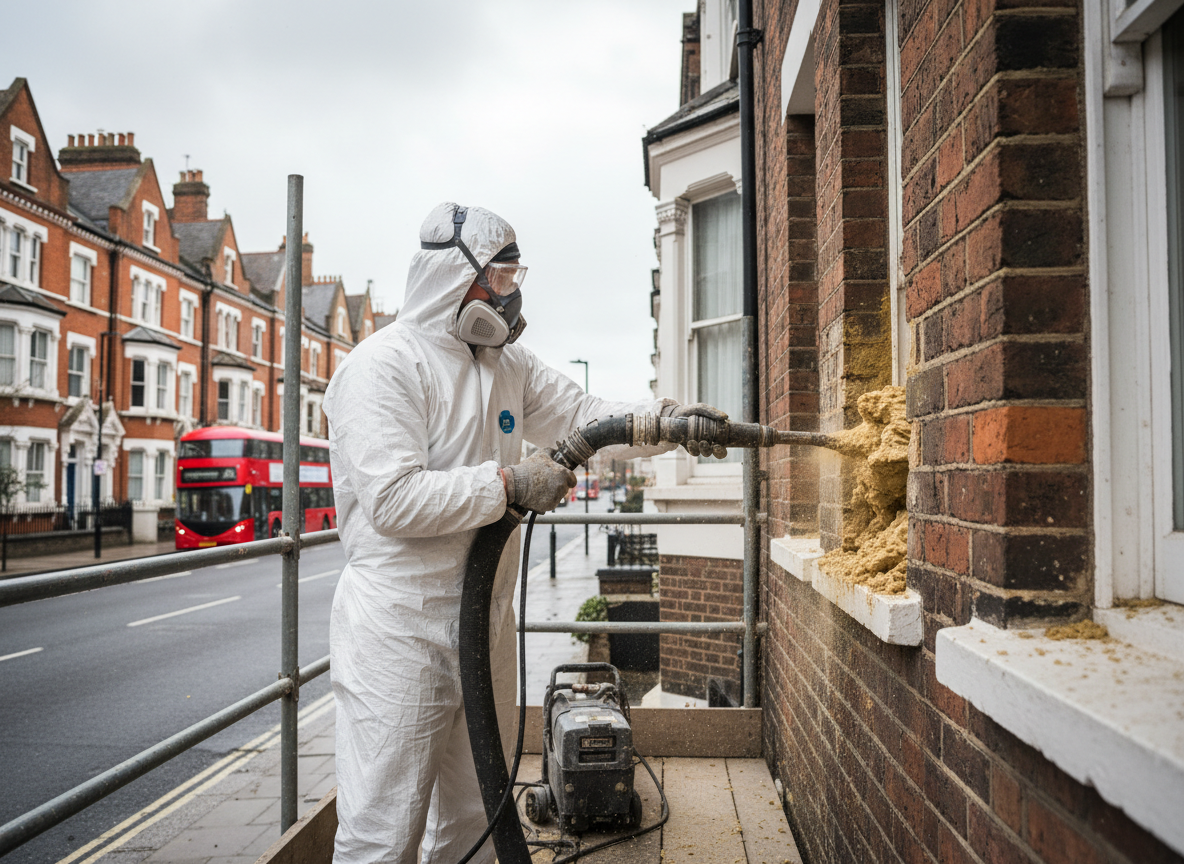
Cavity wall spray foam removal in London often involves Victorian and Edwardian terraces where foam was injected decades ago to address heat loss. Over time the material traps moisture against the inner brickwork, leading to timber decay and salt staining on internal plaster. Extraction requires careful drilling patterns to avoid damaging the original cavity ties that are frequently corroded in the capital's damp climate.
London's frequent rainfall and high water table make full foam clearance essential before any new insulation or damp proofing can be installed. Residue left in the cavity can migrate to the inner leaf and cause recurring mould on party walls, especially in converted flats common around Kensington and Chelsea. Technicians must work around existing services and chimney breasts that interrupt the cavity in these older properties.
Removal work follows the need to reinstate ventilation and allow the masonry to dry naturally before any re-plastering. In Greater London boroughs, building control may require inspection of the cleaned cavity to confirm no bridging remains that could affect future energy efficiency upgrades.
Handling Victorian Brickwork
London's stock of solid and cavity brick walls from the late 1800s demands slower extraction speeds to prevent face damage. Crews often use low-pressure methods around delicate areas near sash windows and corbelled eaves typical of Kensington properties.
Technician insight
In London, the thing that catches most people out with Cavity wall spray foam removal is how Victorian terraces in Kensington and similar areas have narrow cavities and fragile lime mortar that crumbles during aggressive extraction, especially after years of trapped moisture from the city's wet winters.
Kensington Terrace Damp Investigation
Homeowners noticed persistent mould on internal walls after spray foam had been installed years earlier. Inspection revealed foam blocking weep holes and saturating the inner leaf. We extracted the material through carefully placed holes, cleared the cavity and restored ventilation, allowing the brickwork to dry without further damage to original features.
How it works
- 1
Site Assessment
Inspect cavity access points, check for existing damp and map services in London terraces.
- 2
Controlled Extraction
Drill strategic entry holes and remove foam while protecting surrounding brickwork and floors.
- 3
Cavity Clearing and Drying
Vacuum residue, inspect ties and allow walls to dry before any reinstatement work.
- 4
Ventilation and Finish
Restore airflow and make good access points to prevent future moisture issues.
Pricing
Pricing depends on property age, cavity depth and access restrictions common in London terraces.