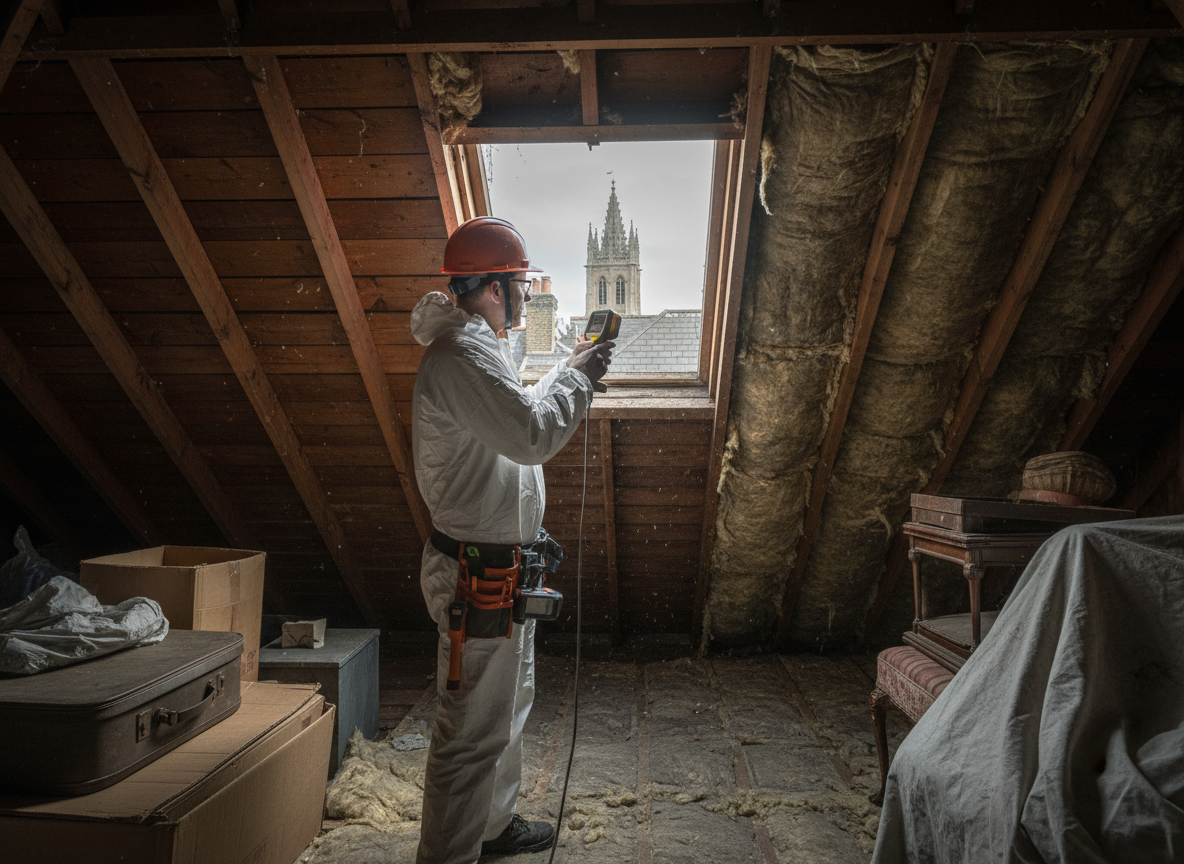
London's older housing stock, particularly the Victorian and Edwardian terraces common in Kensington and surrounding boroughs, often features spray foam applied directly to roof voids and under floors during past retrofit attempts. These installations frequently trap moisture against original timber joists because the foam prevents the natural ventilation that these buildings relied on. An insulation assessment starts with checking for hidden damp, measuring foam depth and adhesion, and noting any signs of timber decay that would affect removal planning.
Weather patterns in the London area bring frequent winter rainfall and high humidity that accelerate problems in foam-insulated lofts. Properties near the Thames or in low-lying parts of Greater London can see rising damp migrate into treated areas, creating edge cases where foam must be removed in sections to avoid spreading moisture. Assessments also review building regulations compliance, as many installations predate current ventilation requirements and now require corrective work during removal.
Access limitations in typical Kensington mews houses and converted flats mean inspectors must use specialist cameras and moisture meters rather than full loft entry. This reveals whether foam has bonded to wiring, pipework or original lath and plaster ceilings, details that change the scope of any subsequent spray foam removal.
Homeowners often overlook how soil conditions and nearby construction affect long-term performance. Vibration from underground works or seasonal ground movement can crack foam seals, allowing water ingress that only shows during assessment.
Technician insight
In London, the thing that catches most people out with insulation assessment is how Victorian terraces in Kensington trap moisture behind closed-cell foam because the original roof voids had no modern ventilation. Once winter temperatures drop and condensation builds, the foam starts to degrade the joists without any outward sign until we open it up.
Kensington Terrace Loft Assessment
A homeowner in a 1890s Kensington terrace noticed musty smells after heavy rain. We found closed-cell spray foam fully bonded to rafters with elevated moisture readings along the eaves. Assessment showed two joists with early rot, so removal was planned in staged sections to allow drying before any new insulation.
How it works
- 1
Initial Site Visit
Inspect the property at 197 Kensington High St base or on-site in London neighborhoods to document foam locations and visible defects.
- 2
Moisture and Material Testing
Use meters and probes to check for trapped damp behind foam and assess adhesion to original substrates in Greater London homes.
- 3
Access and Structural Review
Evaluate loft and floor access points while noting any impact on Victorian timber or Edwardian features common across the area.
- 4
Report and Removal Plan
Provide a written summary with recommended removal sequence and ventilation corrections tailored to local housing conditions.
Pricing
Upfront quotes provided after inspection; cost varies with property age, access difficulty and extent of hidden issues in London homes.